
[sort:name]
[sort:subname] {/pboot:sort}联系我们
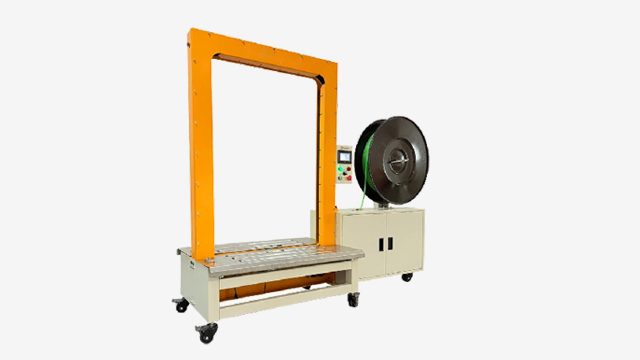
In the selection of servo balers, the difference between low platform and high platform models directly affects their adaptation scenarios and usage effects. The differences between the two in terms of structural design, scope of application, and operating methods need to be analyzed in conjunction with production requirements.
Different structural design and spatial adaptability
The height of the workbench for low rise models is usually between 50-80 centimeters, with a lower overall center of gravity and a relatively compact structure, making it more suitable for installation in workshops or storage areas with limited space height. The worktable of high platform models generally exceeds 1 meter, and the height of the body is relatively high. Some models are designed to cooperate with assembly line transmission, and a conveyor channel is reserved at the bottom, which is suitable for docking with high-level production lines. In terms of floor area, low rise models have a height advantage and are more flexible in utilizing vertical space, while high rise models may require a more spacious horizontal operating area.
There is a clear emphasis on the applicable product types
Low rise models are more suitable for packaging lightweight and small products, such as electronic accessories, cosmetic gift boxes, stationery sets, etc. This type of product is easy to handle manually, and operators can easily place it on a low platform to complete packaging with equipment. High platform models are commonly used for medium-sized or heavy-duty products, such as household electrical packaging, small building materials, and whole box bottled beverages. Their height facilitates coordination with handling equipment such as forklifts and conveyor belts, reducing the labor intensity of manual lifting.
There are differences in operation methods and human-machine cooperation
Due to the lower tabletop, the low platform model allows operators to immediately complete loading, adjustment, and other actions without the need for frequent bending or auxiliary tools. Long term operation is not easy to fatigue, making it suitable for scenarios with a lot of manual assistance. The operation of high platform models relies more on automated transmission. If manual intervention is required, it may be necessary to use footstools or adjust the station position, which is more suitable for connecting with fully automated production lines and reducing manual participation in the process.
The adaptation direction of performance parameters is different
Although the core servo control system functions of the two are similar, there is a focus on adjusting the bundling force and speed. High platform models often handle heavy goods and have a wider range of bundling strength. Some models can support thicker strapping straps; The low platform model has more delicate precision control and can adapt to the strict requirements of lightweight products for bundling tightness by fine-tuning parameters. In terms of operating speed, high platform models are usually designed for continuous high-speed mode to match the rhythm of the production line, while low platform models can flexibly switch between fast and slow gears to meet the packaging needs of small batches and multiple specifications.
The convenience of installation and maintenance differs for low platform models, which have a compact structure and relatively low positions for core components such as motors and cutters. Daily cleaning, component replacement, and other maintenance operations are more convenient, without the need for high-altitude operations. Due to its high height, some components of the high platform model are installed on the upper part of the body, and maintenance may require dismantling the protective plate or using a ladder, making the operation steps more cumbersome. In addition, the installation of high platform models requires higher ground load-bearing requirements and a stable foundation, while low platform models have stronger adaptability to installation environments.